
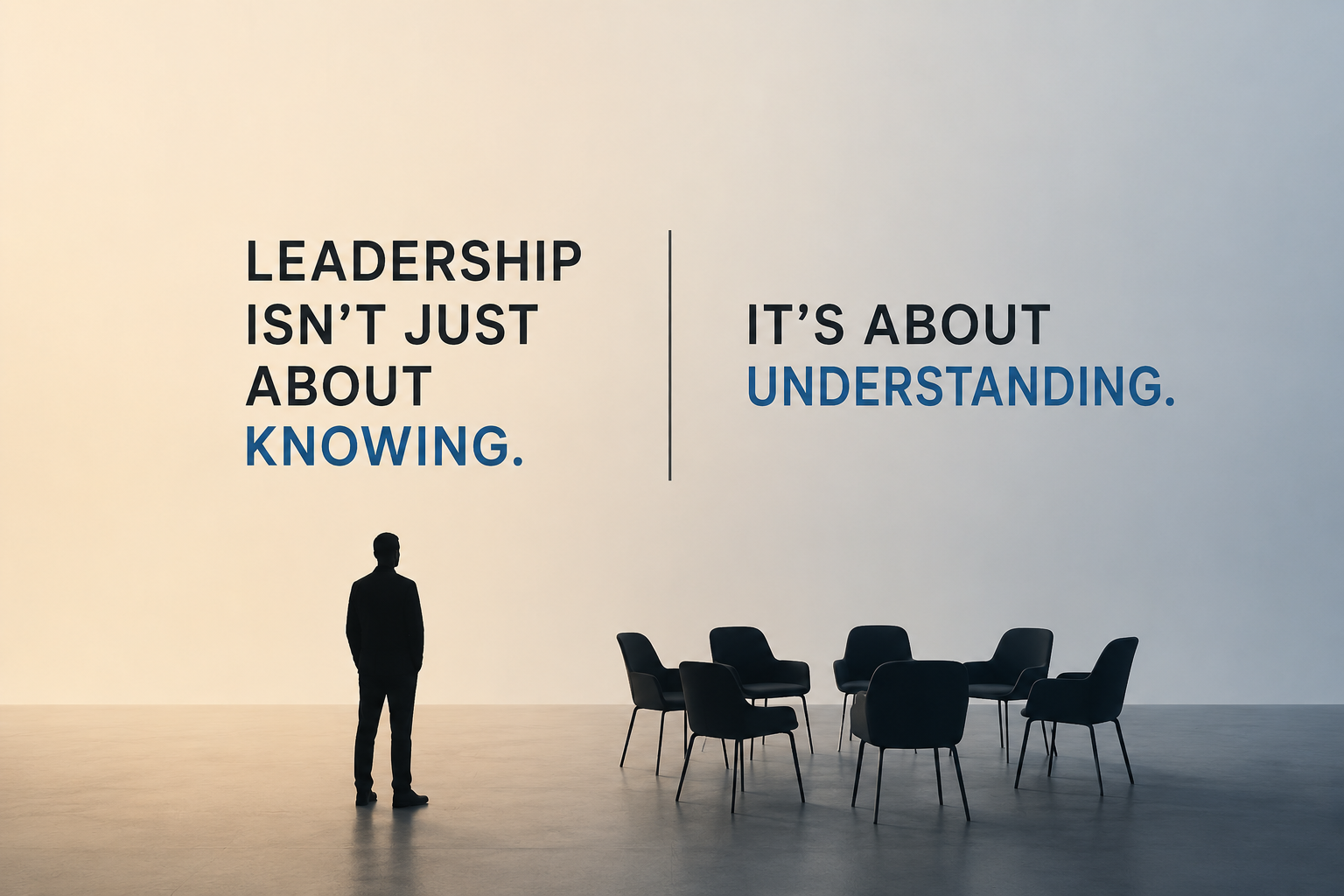
Why Emotional Intelligence Training Is the Leadership Investment Most Companies Get Backwards
A CEO once told me his best engineer was being promoted to head of the department.
I asked why.
“Because he’s the smartest person in the room.”
Six months later, three of his best people had quit. The engineer was still the smartest person in the room. He was also, by then, the loneliest.
This is the story behind most failed leadership transitions. Companies promote for competence and then act shocked when competence alone can’t hold a team together.
The Skill Nobody Trains For
Organizations spend enormous budgets on strategy, negotiation, and domain expertise. Almost none of that spend goes toward the skill that determines whether people actually want to work for the person leading them.
Emotional intelligence isn’t a soft skill. It’s the operating system every other leadership skill runs on. A brilliant strategy delivered by someone who can’t read a room, absorb pushback, or manage their own reactivity dies in the room it was pitched in.
What EI Training Actually Builds
Let’s be precise, because “emotional intelligence” has become a phrase people nod at without knowing what it means.
Self-awareness under pressure. The pause between a trigger and a reaction. Leaders without this skill make their worst decisions in their most important moments… the ones where stakes are high and time is short.
Reading what isn’t said. A team member who says “I’m fine” in a tone that says otherwise. A room that’s gone quiet not because everyone agrees, but because no one feels safe disagreeing. Leaders who can’t read this run teams that look aligned and are actually just afraid.
Regulating, not suppressing. This is where most leadership training gets it wrong. It teaches people to look calm. Real EI training teaches people to be clear-headed… which is a different, harder, and more durable skill. Suppressed anger doesn’t disappear. It leaks out sideways, in sarcasm, in withheld feedback, in decisions made to avoid a conversation instead of have one.
Holding tension without needing it to resolve immediately. Two people can disagree, both be partly right, and the leader’s job is to hold that complexity rather than force a premature resolution just to feel comfortable again.
The Business Case, Stated Plainly
Teams led by emotionally intelligent managers report higher retention, faster conflict resolution, and more candid upward feedback… the kind that catches problems while they’re still small enough to fix.
None of this shows up on a resume. All of it shows up on a P&L, eventually, as either retained talent and caught mistakes, or as attrition and blind spots.
Why This Belongs in Leadership Training Specifically
Technical training scales knowledge. Leadership training scales how that knowledge lands on other people. You can teach someone everything about strategy and still send them into a room where they demoralize a team in eleven minutes.
The leaders who don’t need EI training are rare enough that you could build an entire program around the other 95%.
The Real Argument
Every leadership failure I’ve been asked to help untangle – the department that lost its best people, the reorg that triggered a walkout, the manager everyone privately dreaded – traces back to the same root. Not a strategy failure. An emotional intelligence failure.
Companies keep training leaders to think better. The teams they lead are waiting to be led by someone who can feel accurately – their own state, and the room’s.
That’s not the soft skill. That’s the whole job.
P.S :– “Somewhere, an HR department is still calling this training “optional.”